BËT-BI
A New Museum Typology in Senegal
Status: Current
Location: Senegal
Team: Mariam Issoufou, Aaron Nkhoma, Harouna Diallo, Barira Boureima, Victoire Tata, Abdoulaye Makadassou, Assoumana Attahirou, Tigran Kostandyan.
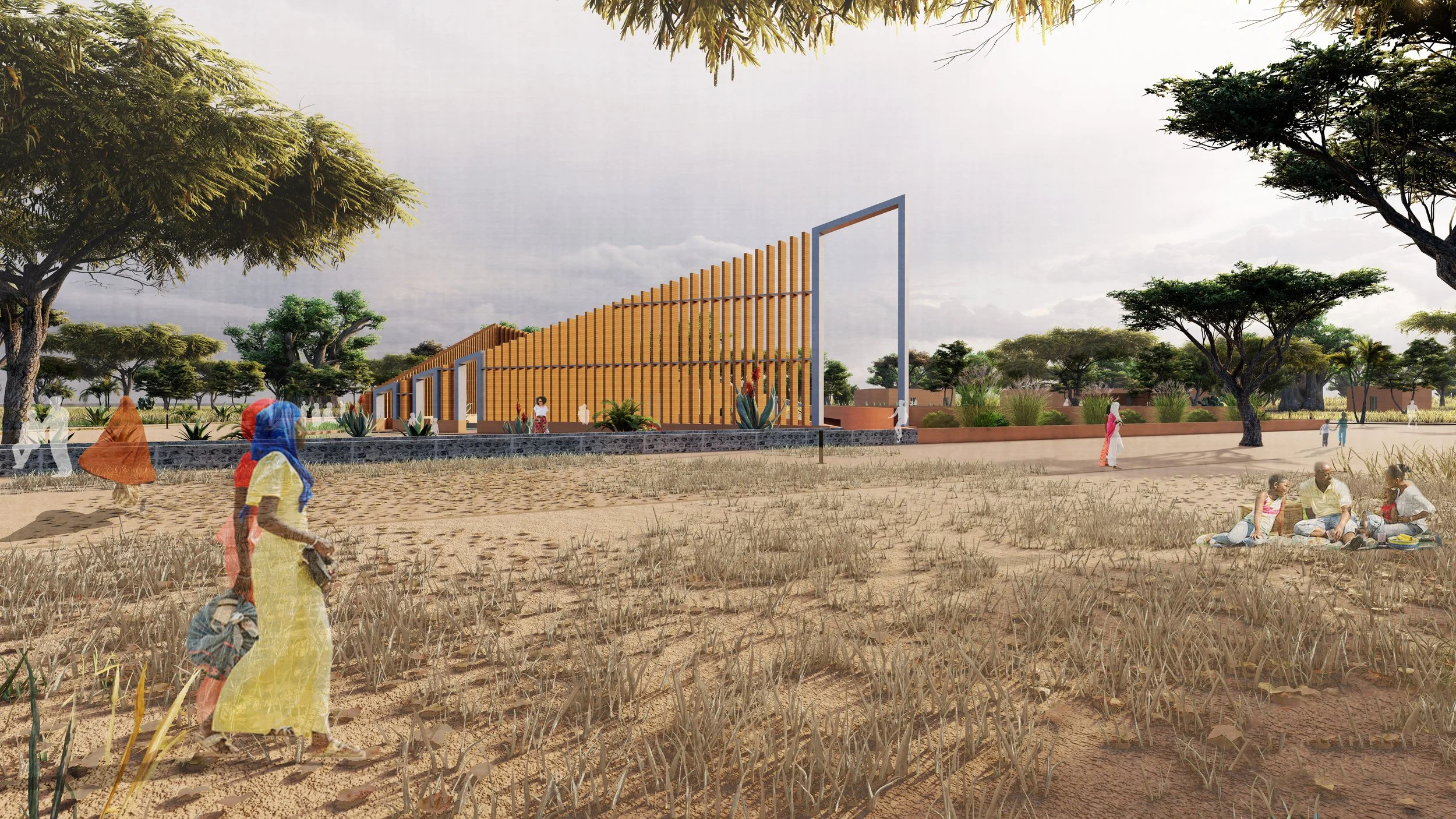
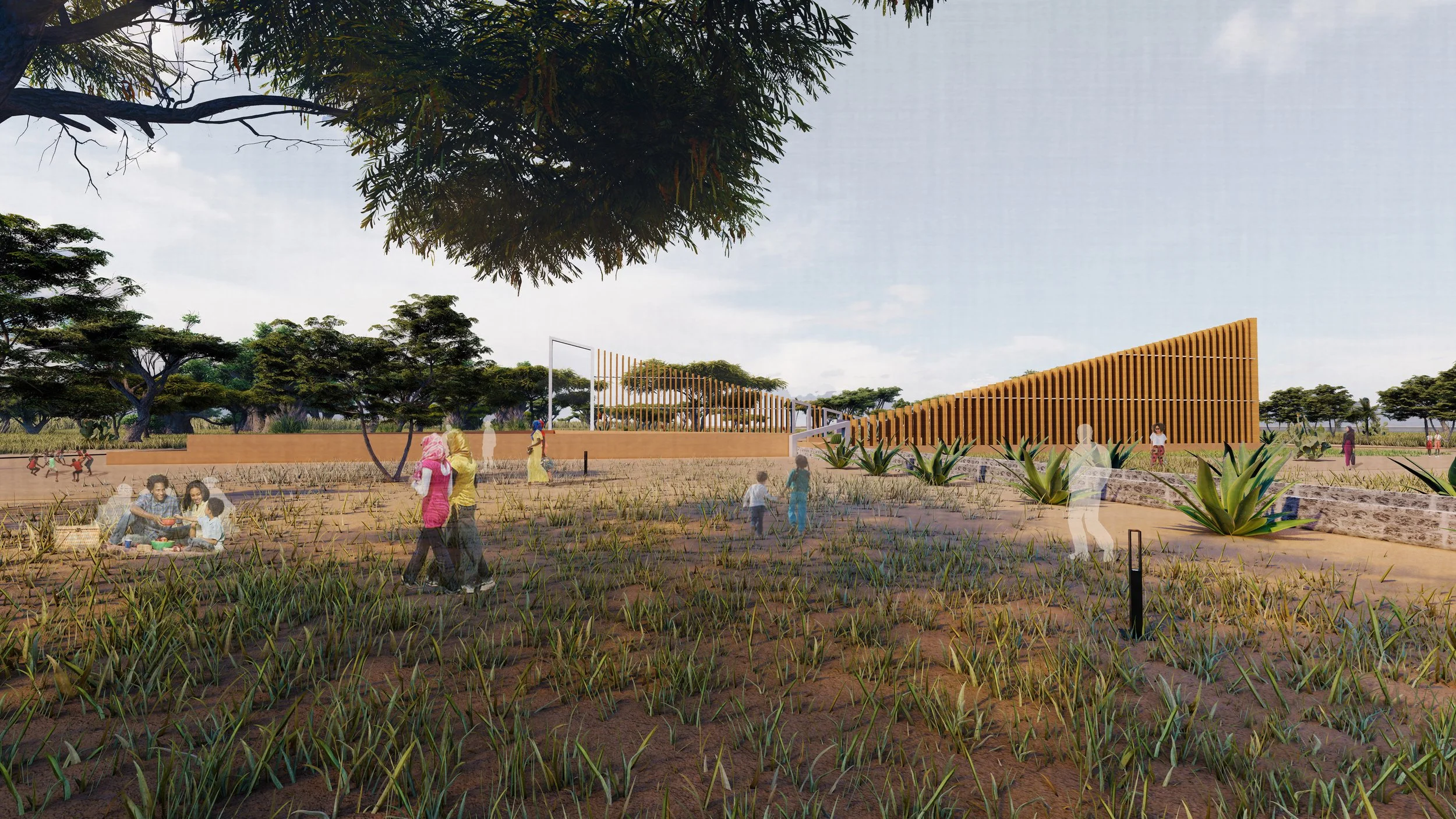
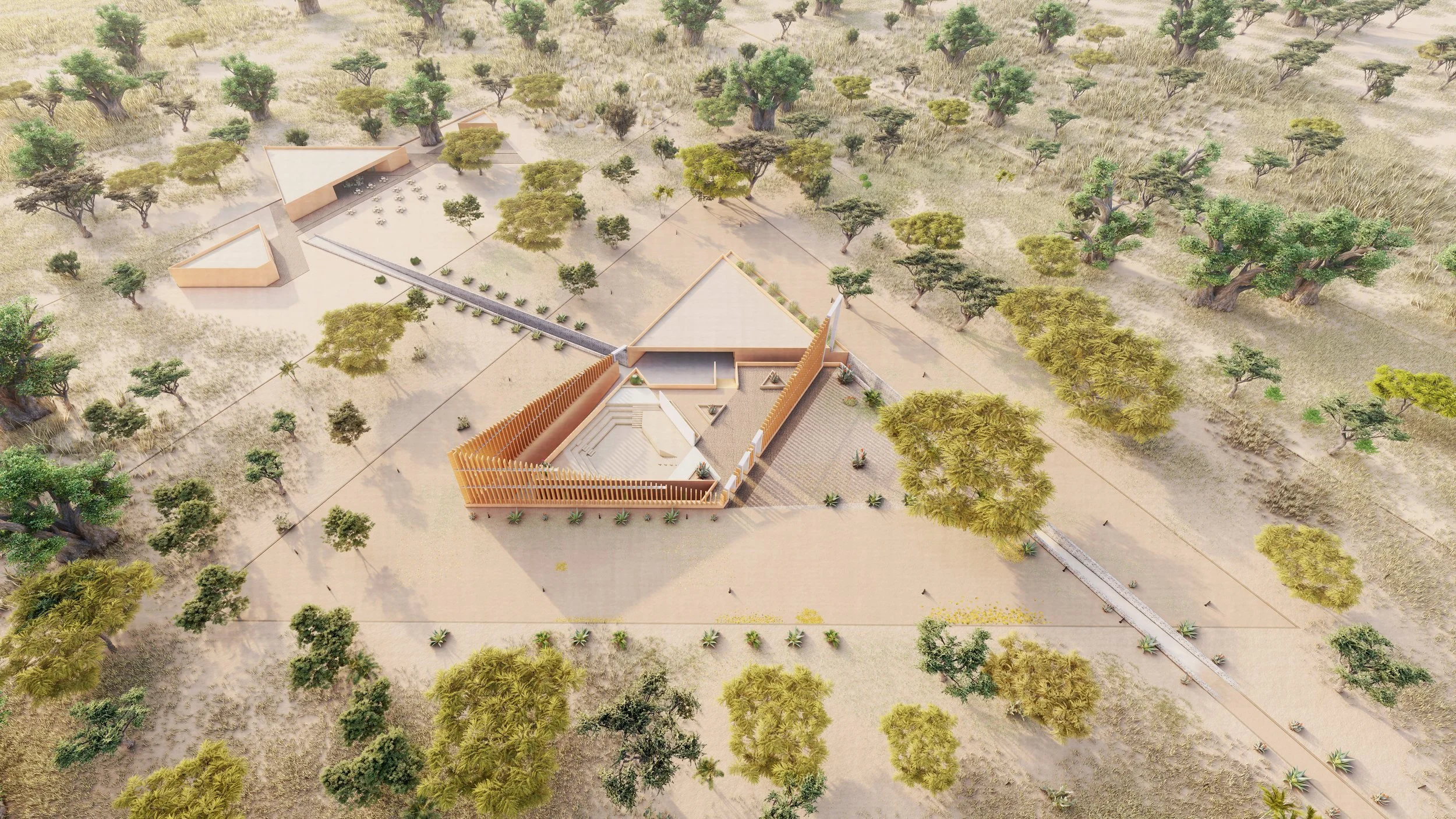
Situated in Senegal’s Tambakounda region, the Bët-bi Museum is designed to celebrate the rich heritage of the land and the traditions of the people who have historically inhabited it to the present day. The site is located at the tail-end of a renowned series of over 3000 ancient stone megaliths discovered all along the Senegambia river, including four UNESCO World Heritage spots.
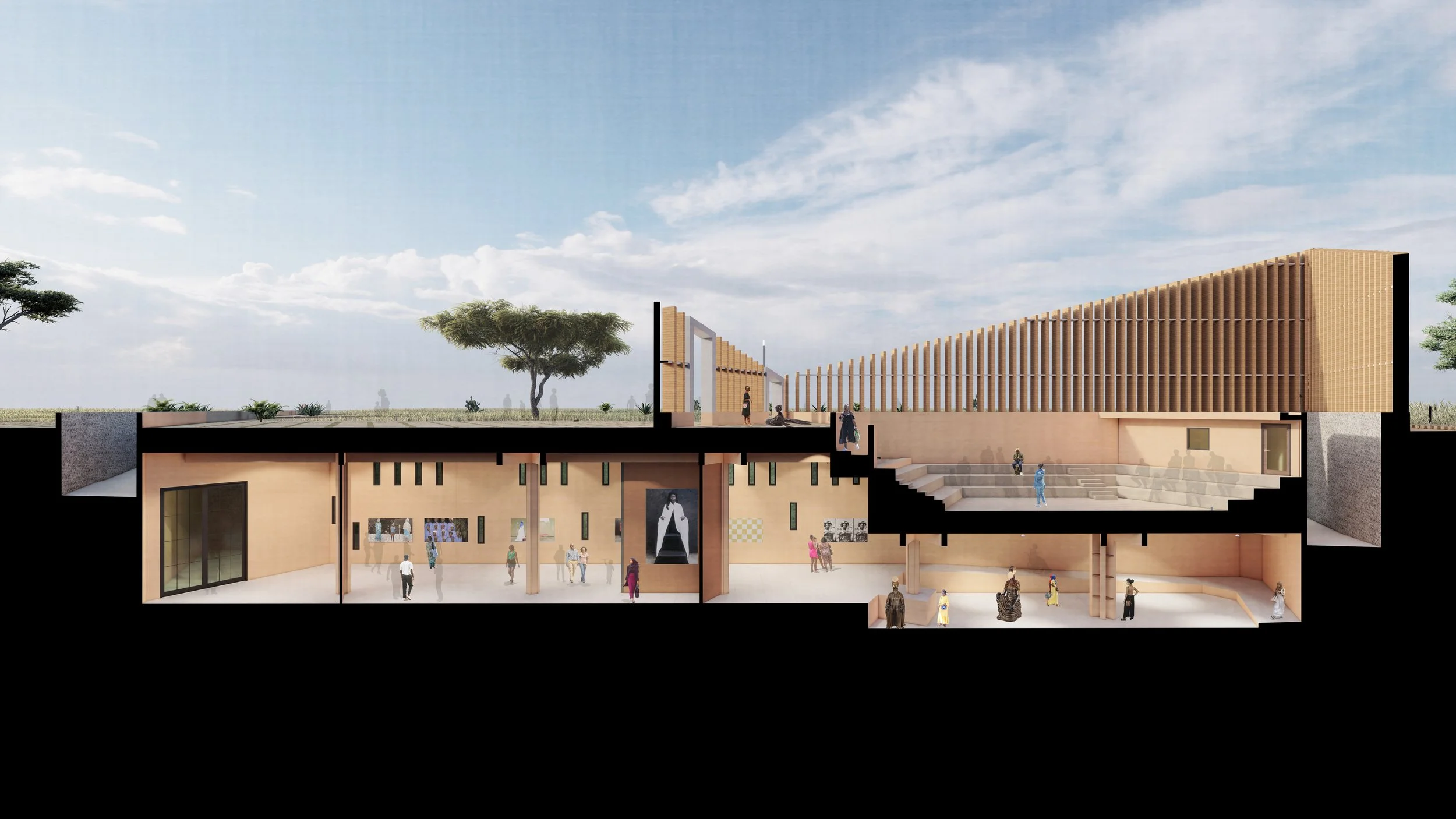
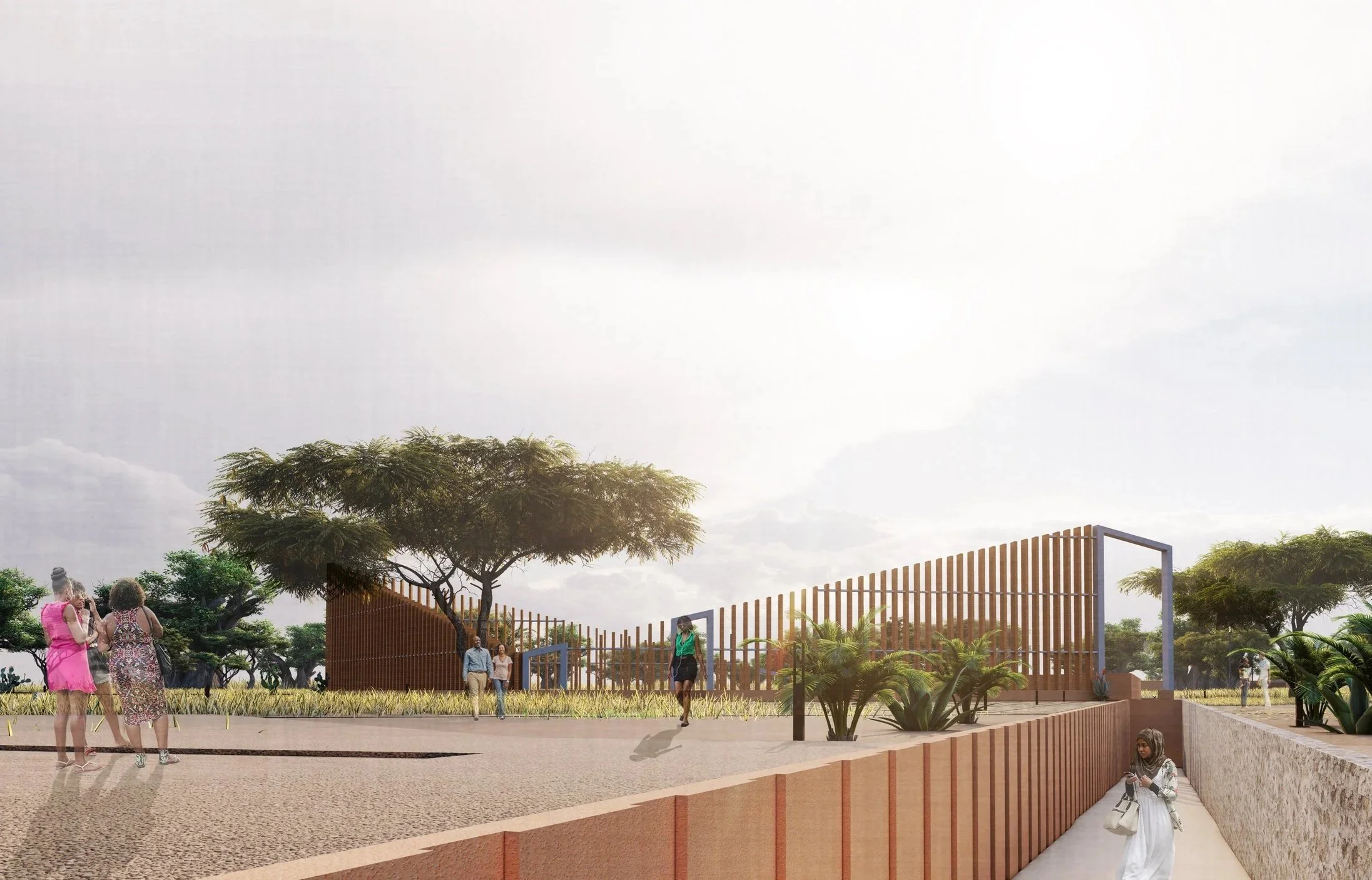
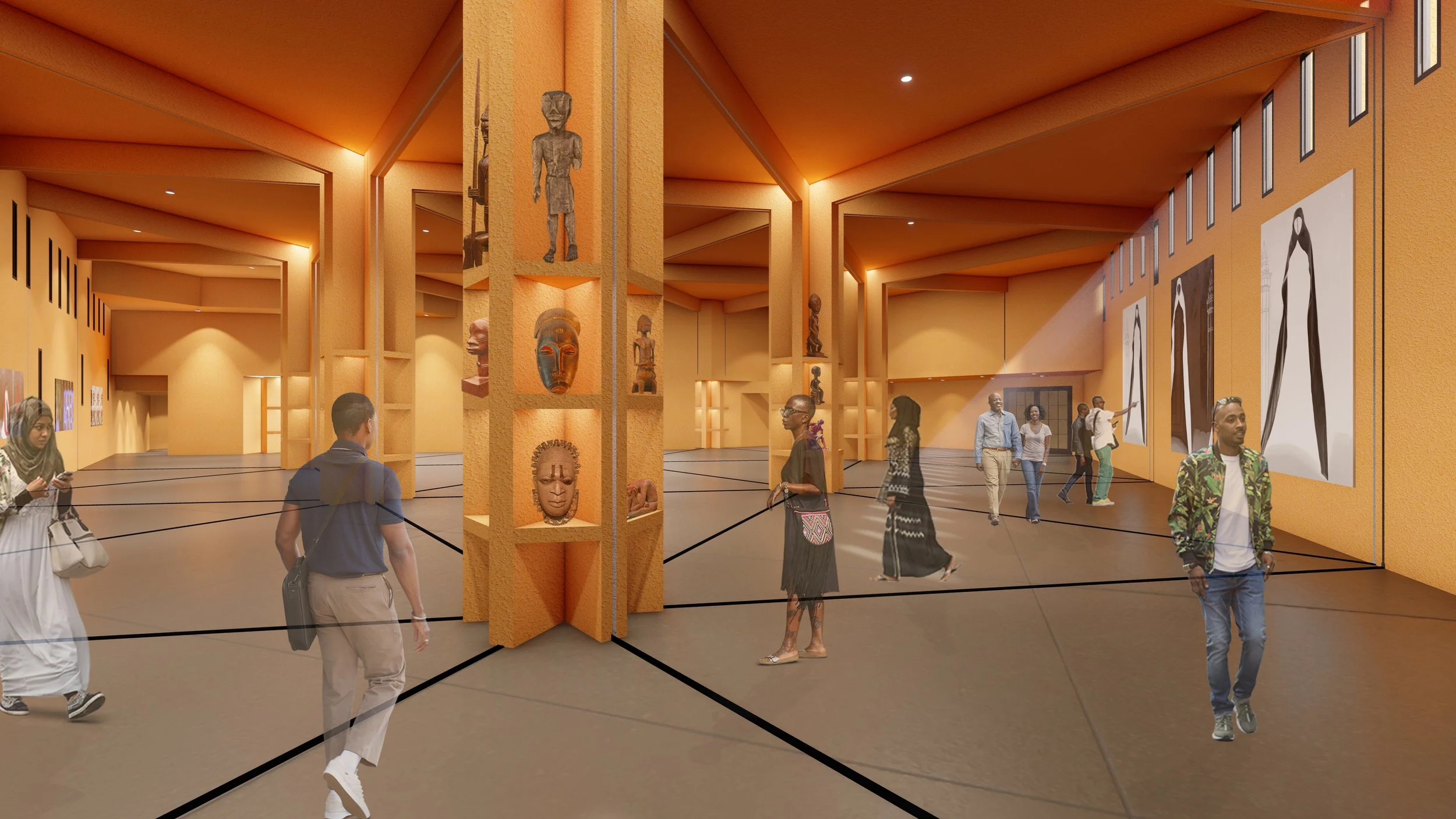
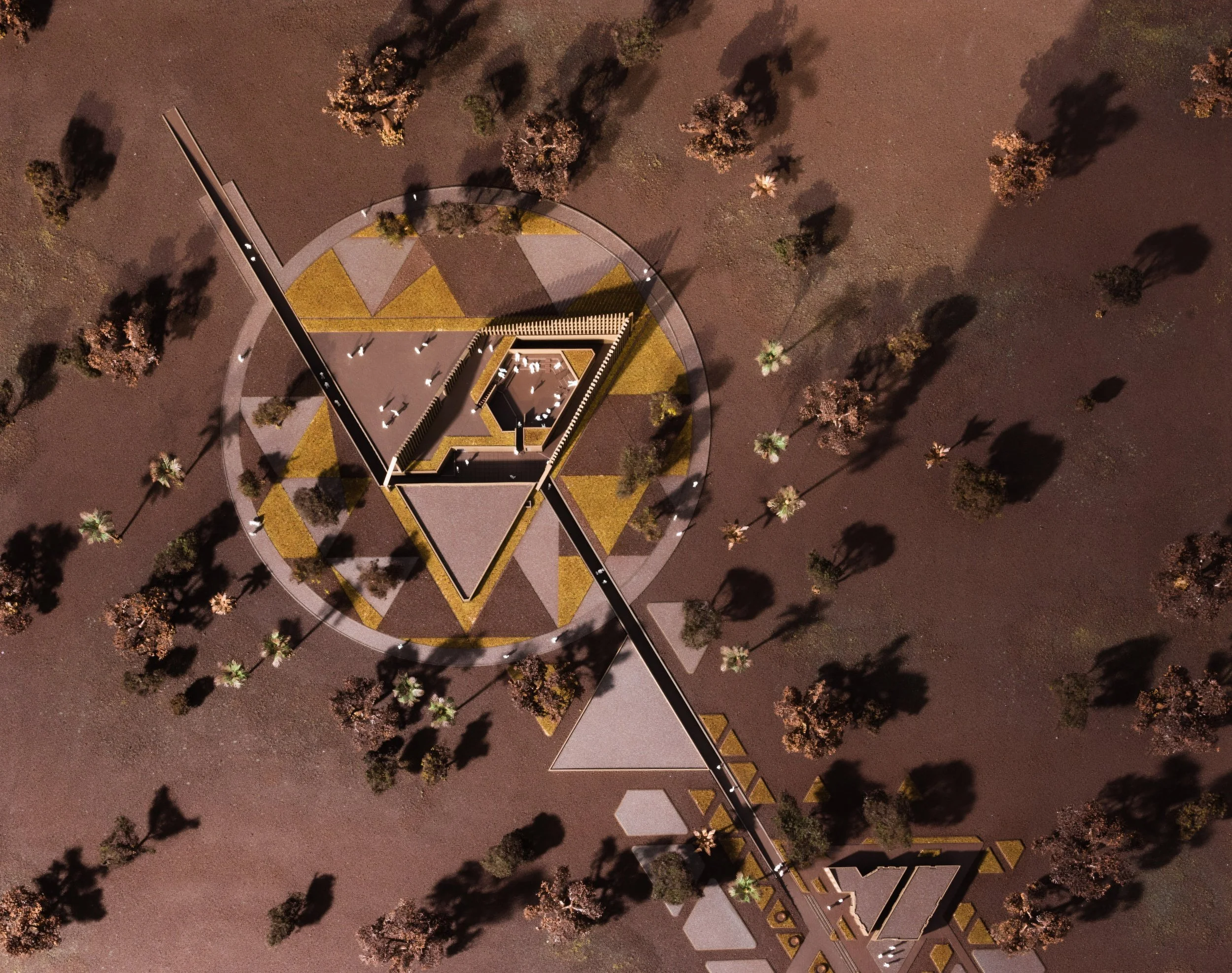
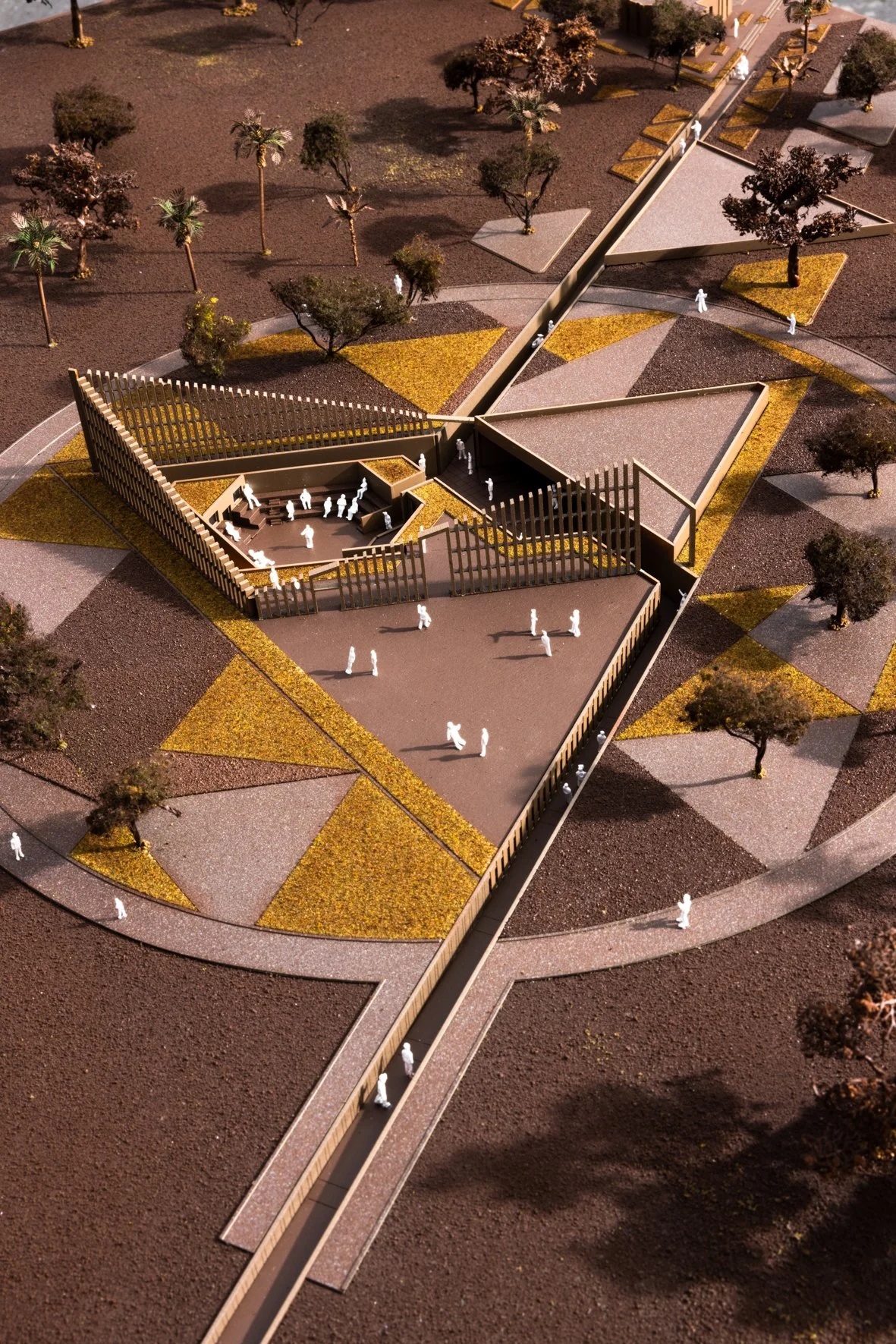
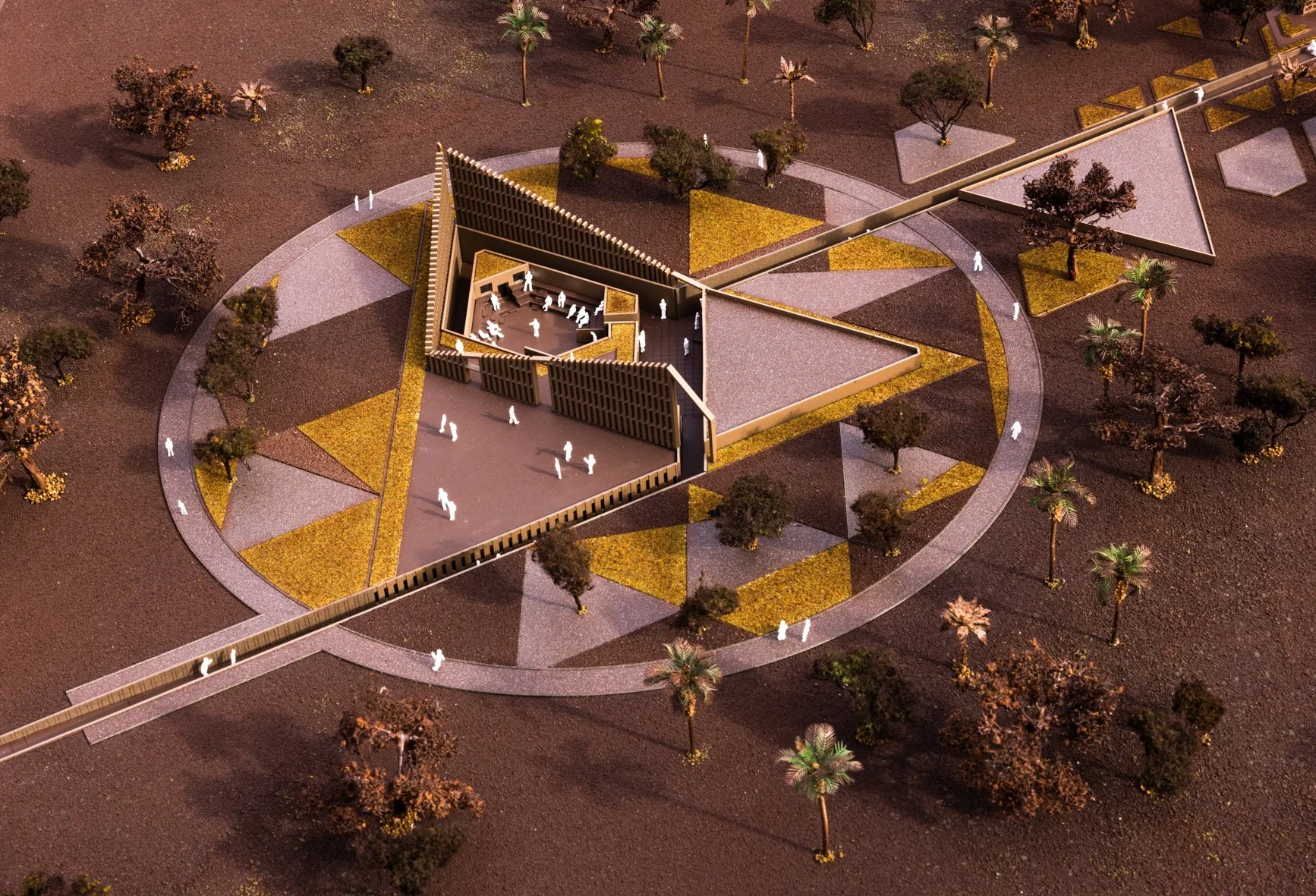
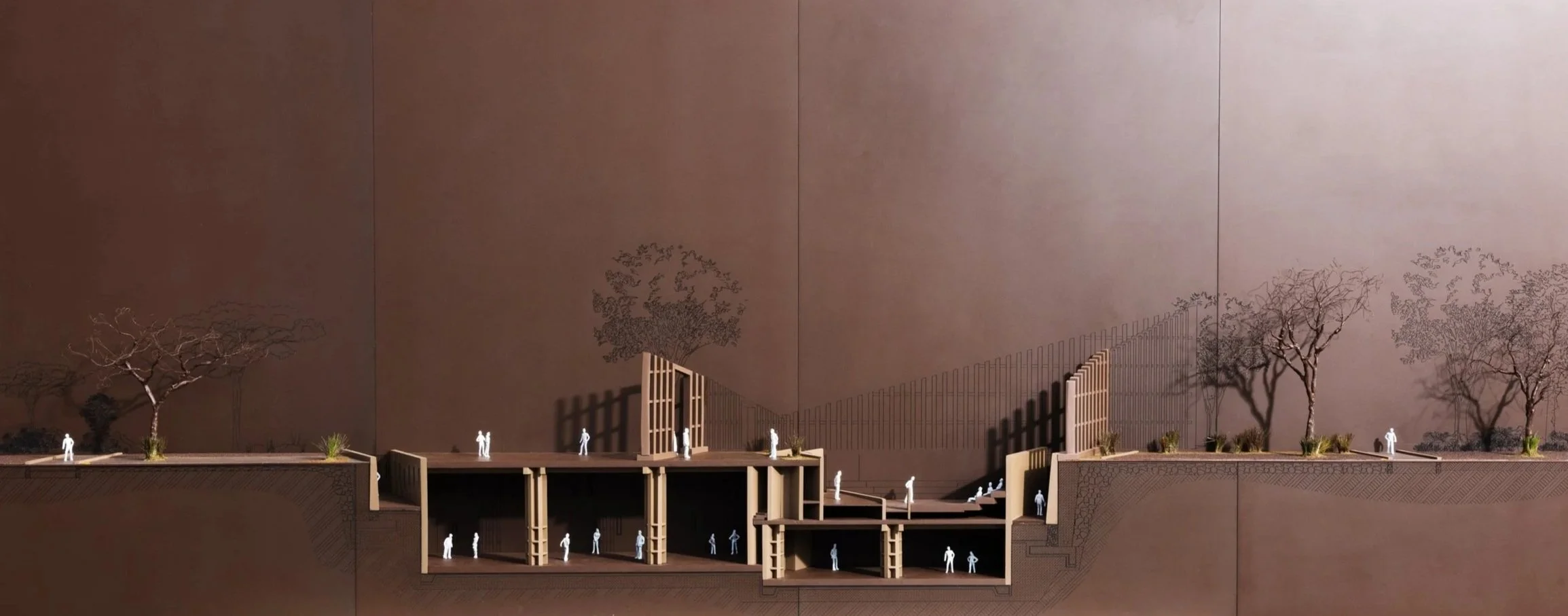
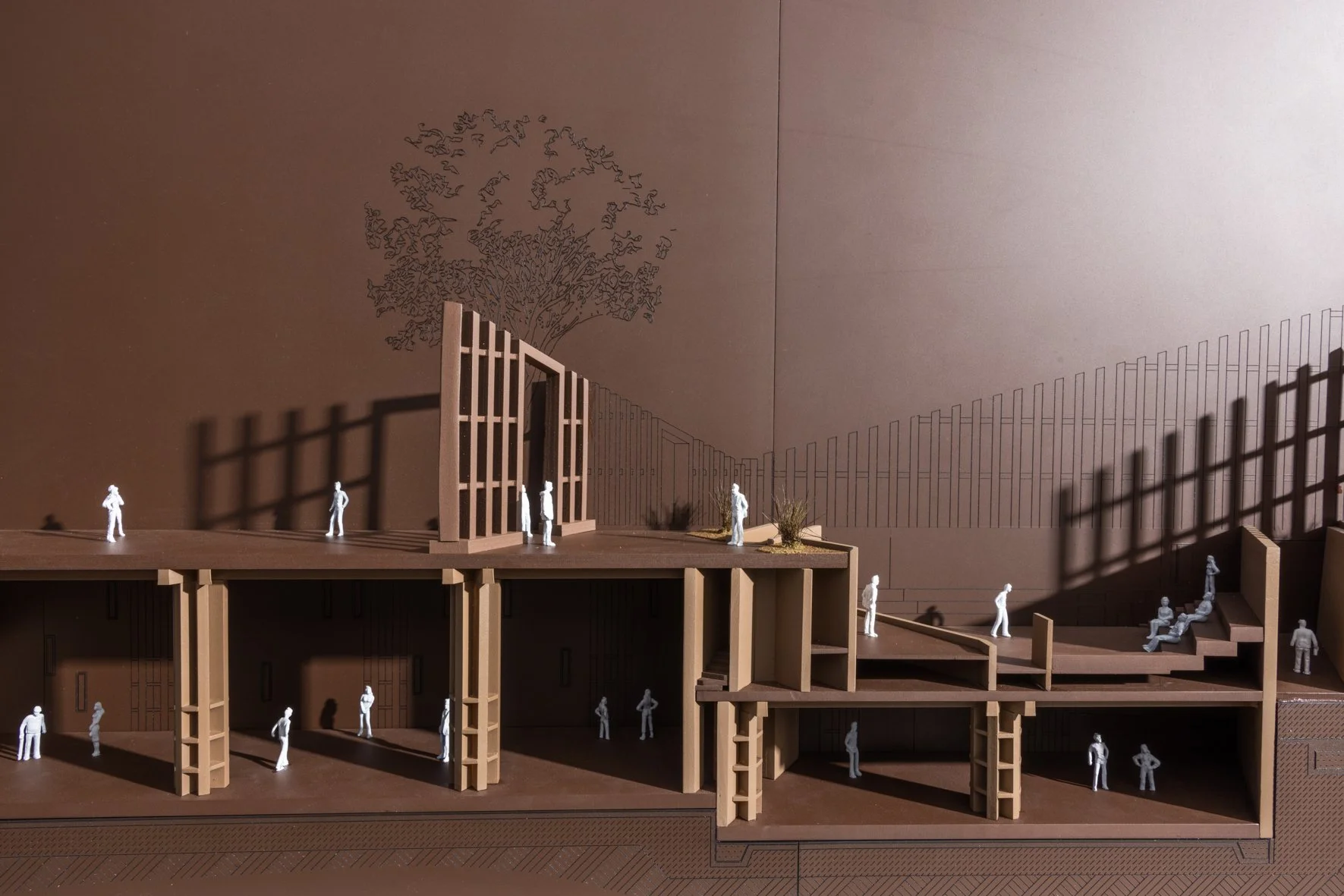
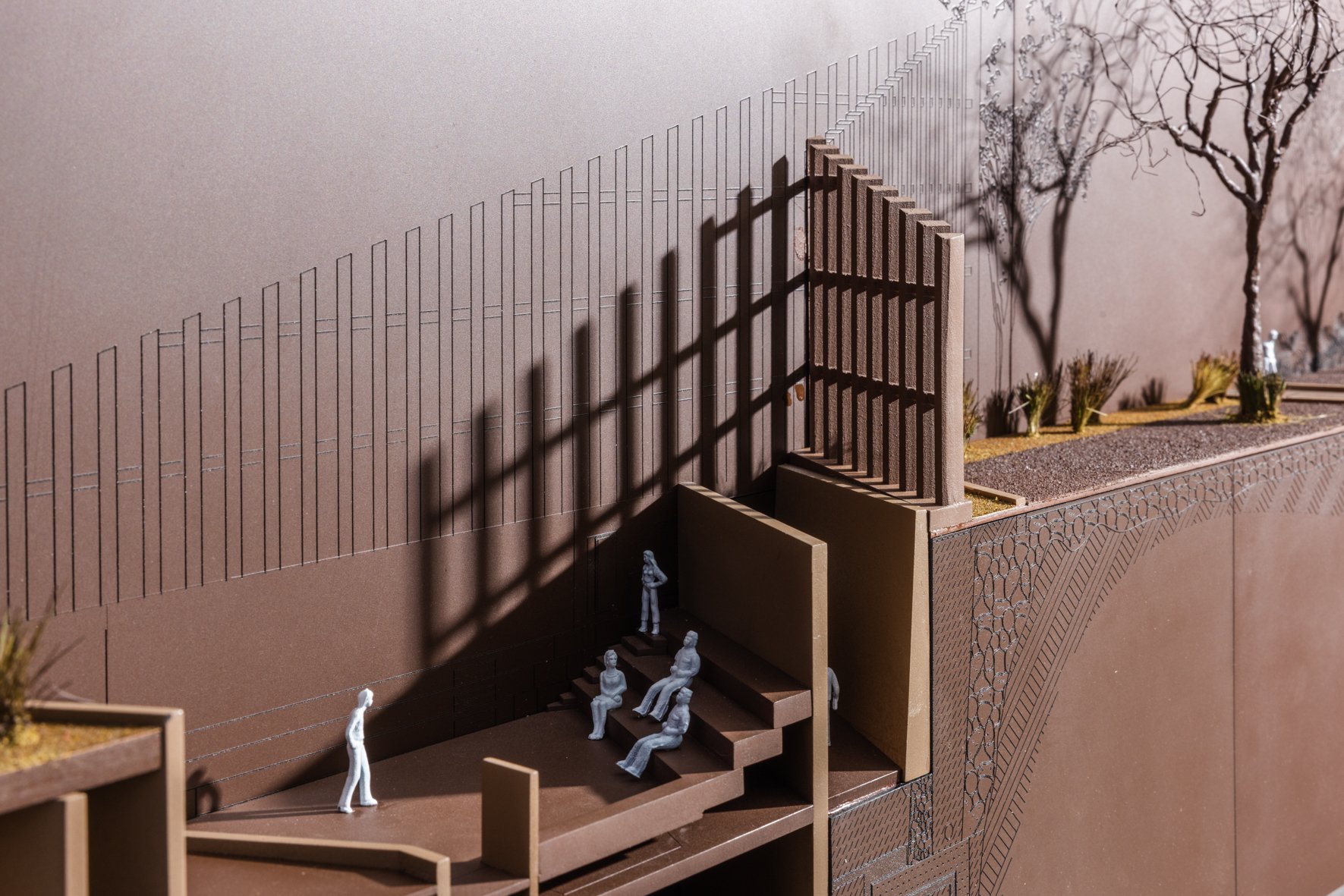
Commissioned by the Josef and Anni Albers Foundation and Le Korsa, Bët-bi reimagines what a museum can be when it is intimately tied to its context. Rather than designing a monument that demands entry, we designed a landscape: the galleries are sunk below ground, accessible via a seductive ramp that draws visitors downward as if on a sacred journey into the earth.
-
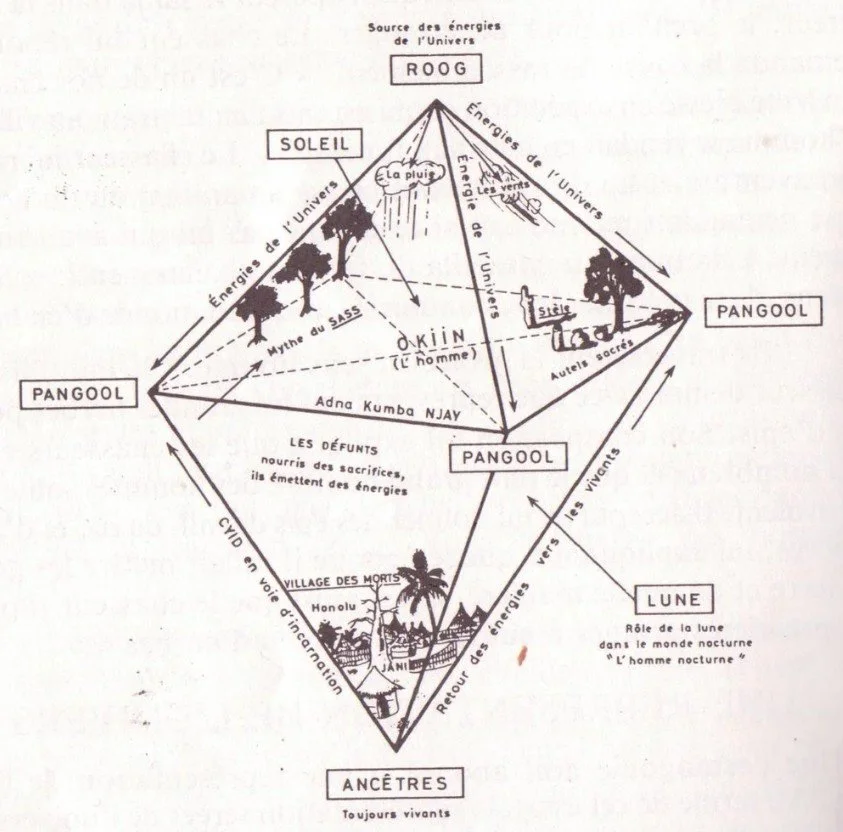
The building draws inspiration from the precolonial territories of Saloum Kingdom and Mandinka (Mali) Empire. Its design reinterprets the monumental architecture of the Mandinka while integrating spatial concepts rooted in Serer spiritual traditions. Serer cosmology understands the divine, earthly, and ancestral realms as interconnected through a series of triangles linking sky, earth, and underworld. This self-renewing diagram informed the museum’s spatial organisation and programming, shaping interiors as a sequence of distinct yet interconnected spaces arranged on a triangular grid.
The 1,000-square-meter, state-of-the-art museum is constructed using sustainable, locally inspired building methods in close collaboration with local artisans. It includes indoor and outdoor event spaces, exhibition galleries, and a library. While an open public realm occupies the ground level, the galleries are sunken underground to honour the sacrality of the land. This gesture also reframes the museum’s historical role as a site of extraction, instead positioning art as something encountered collectively and embedded within the landscape.
In this regard, the Bët-bi Museum also intends to serve as a temporary space for repatriated African objects, advancing the essential process of returning African art to the continent of its creation by acting as a facilitator between Western collections and the African nations and communities to whom these works rightfully belong but which may not yet have the resources to conserve them.
-
Design Architects
Mariam Issoufou ArchitectsModel Maker
Boyd&Ogier -