YANTALA OFFICE
First Raw Earth Multi-storey Offices in Niamey
Status: Under Construction
Location: Niamey, Niger
Team: Mariam Issoufou, Raymond Oloo, Harouna Diallo, Barira Boureima
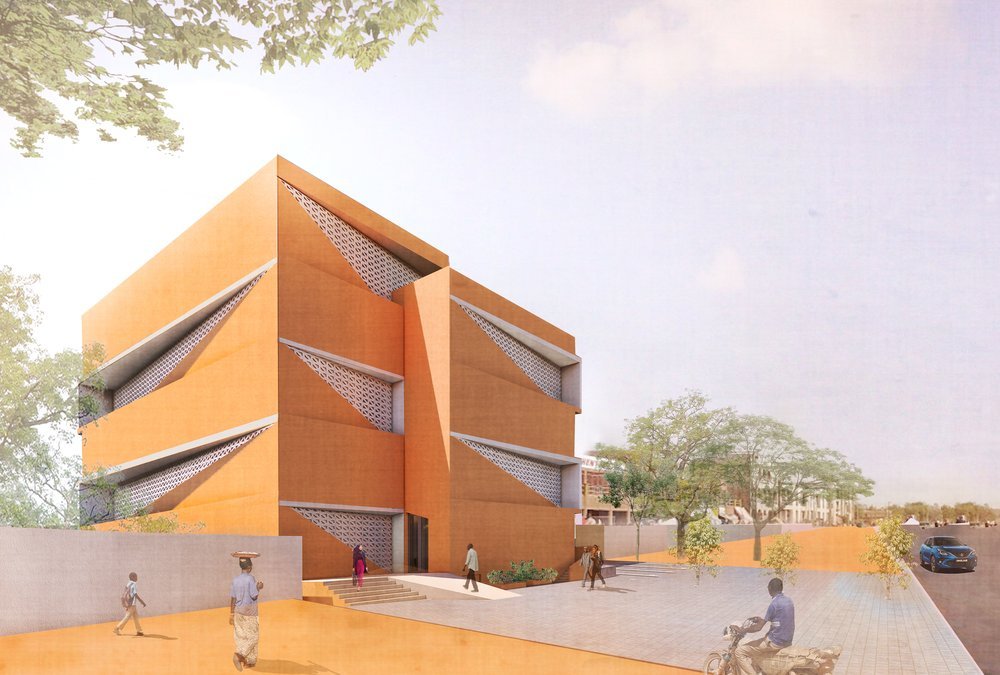
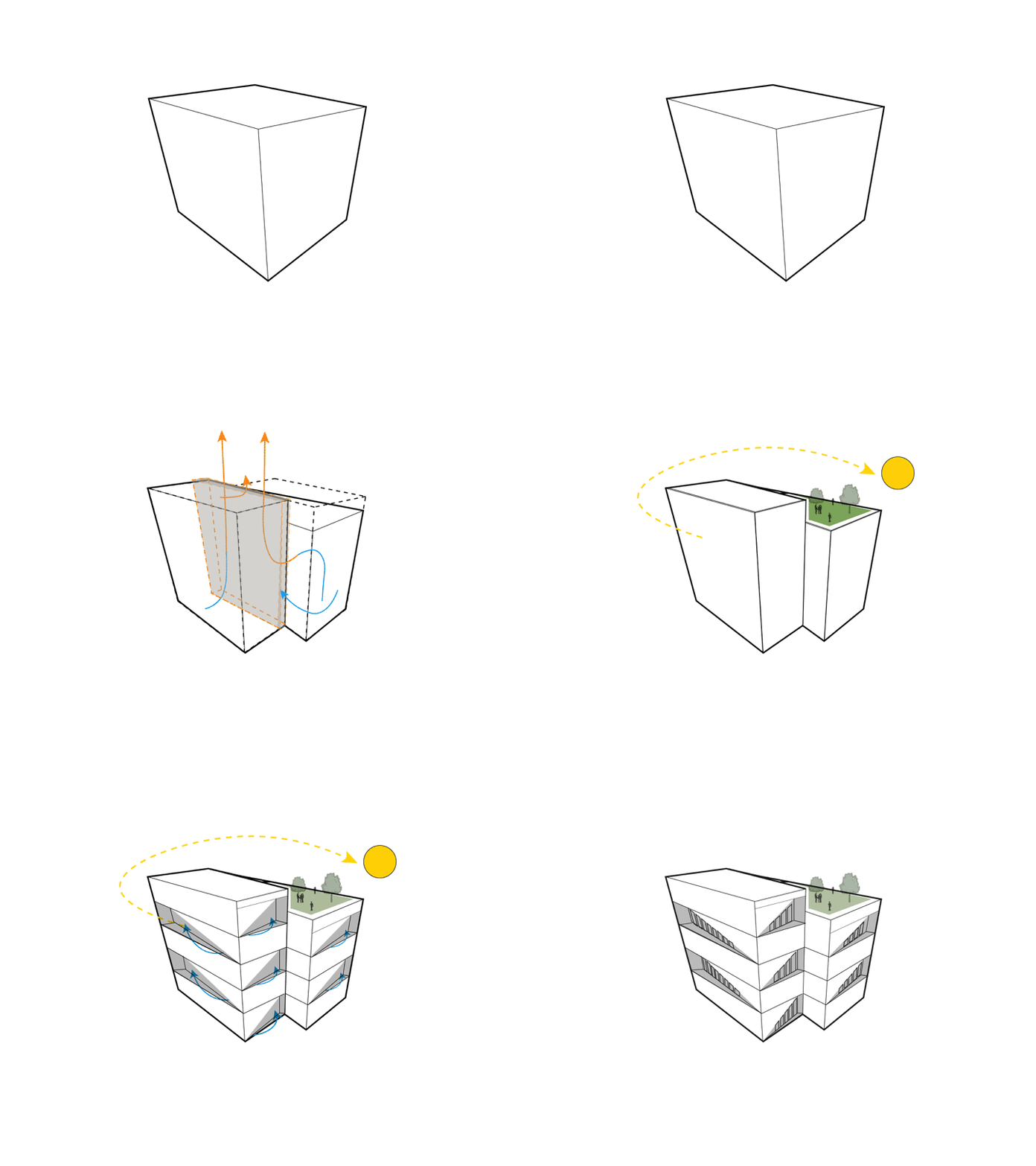
Located on a small plot against a busy road in Niger’s capital, Niamey, the Yantala Office design offered the opportunity to design a low-cost commercial building that stands out among the generic concrete buildings surrounding it. Inspired by the vernacular architecture of the city of Zinder, which still remains in use after 400 years, the design adopts a dynamic street-facing facade with strategically placed openings to protect the building from direct heat gain and harsh sunlight. Minimizing energy consumption through the use of climate responsive form and materials was critical to making a lower-cost building.
-
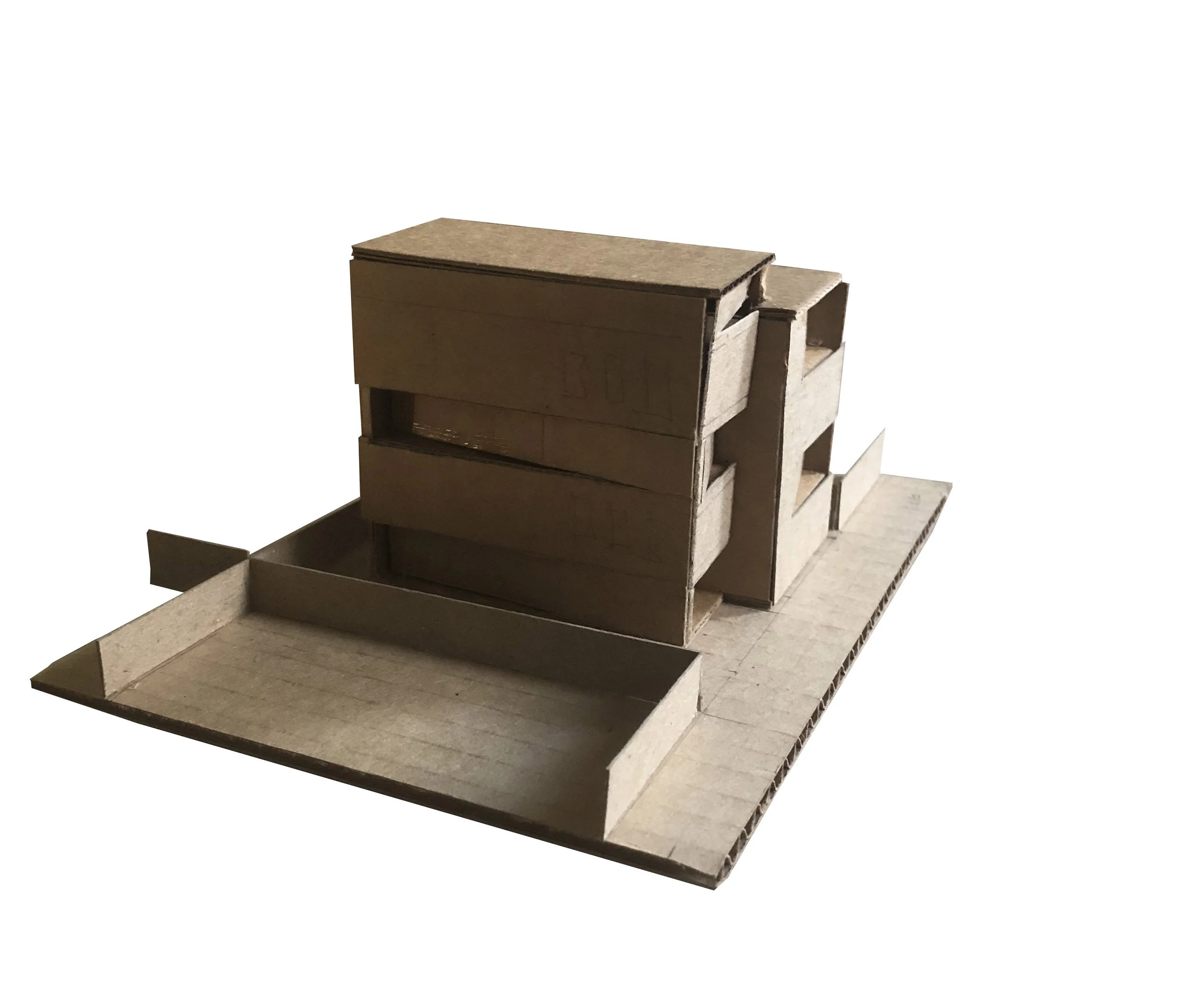
The design produces two volumes, one higher than the other, creating a social hub on the terrace. Between them, a hidden central void takes advantage of a chimney effect that allows hot air to rise and escape through ventilation grates in the ceiling. The exterior walls are recessed diagonally to form shaded triangular window-placements and a plaza at ground level, extending the building into the public realm while benefiting from its own shadow.
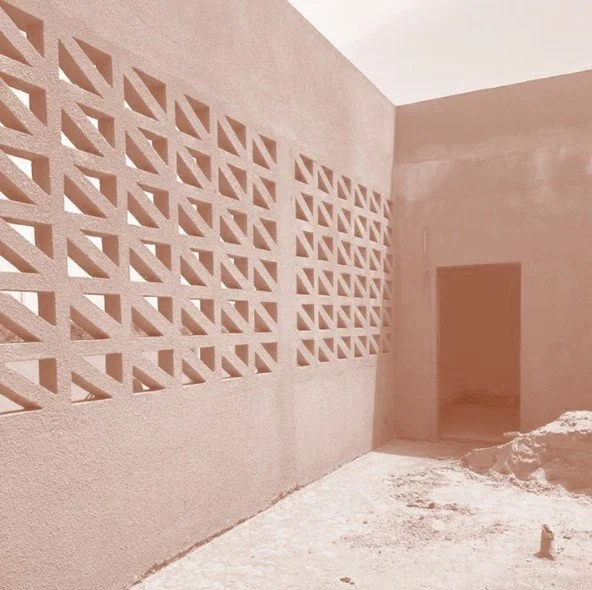
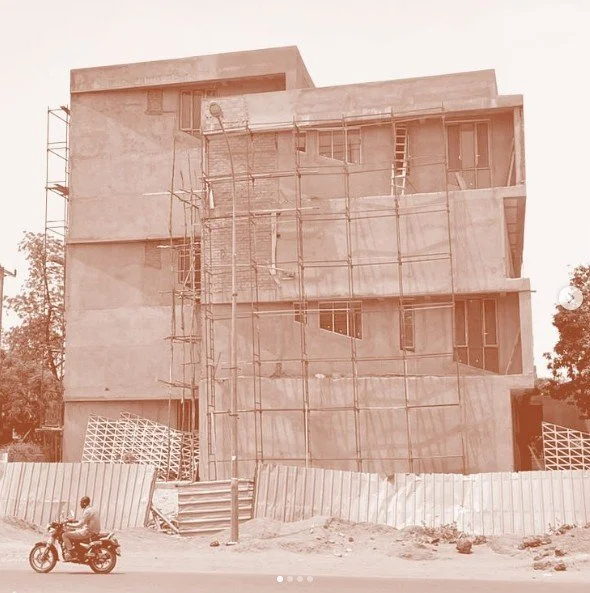
With material innovation at the forefront, the structure utilizes a hybrid system of concrete framing and compressed earth brick infill. The compressed earth bricks are fire resistant, absorb heat, and help keep insects at bay, improving thermal comfort without mechanical dependence. Triangular windows in the facade, evocative of Hausa wall decorations, are fitted with screens to reduce heat gain. Openings are placed where shade is present, while solid surfaces provide protection where exposure is greatest. The result rethinks the office typology in both form and performance.
Rooted in local economic and climatic realities, the project demonstrates that conventional measures such as excessive air conditioning can be greatly reduced when design is inherently climate responsive. By prioritizing passive strategies and locally sourced materials, construction costs were reduced by approximately 20 percent compared to a cement building of similar size and height. The building acts as a testing ground for how architecture in this context can adapt to new typologies while remaining grounded in place.