ARTISAN’S VALLEY
Makerspace and Market in Niamey
Status: Current
Location: Niamey, Niger
Team: Mariam Issoufou, Aaron Nkhoma, Victoire Tata, Abdourahmane Soumana, Assoumana Attahirou, Abdoulaye Makadassou
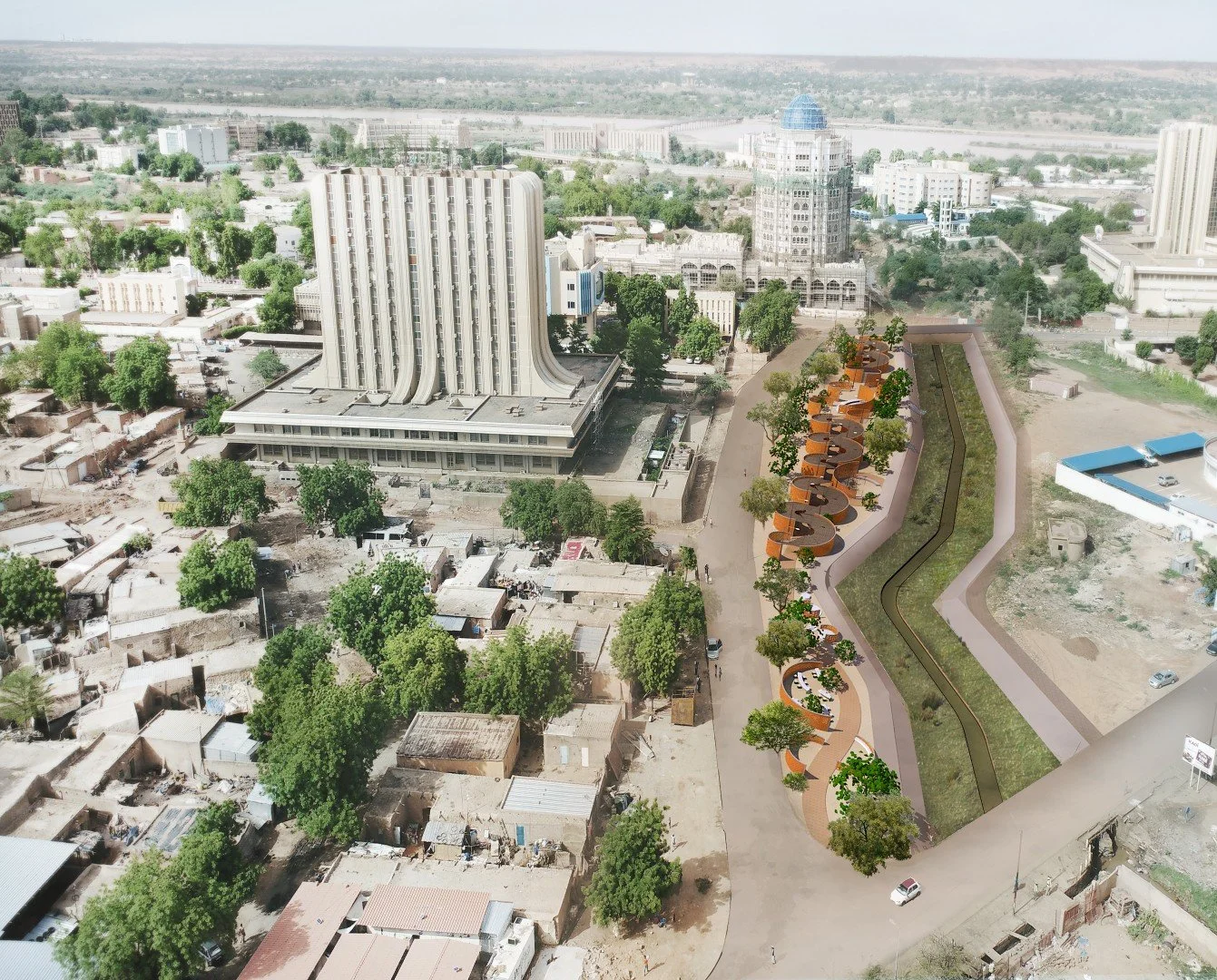
Nestled along the Gounti Yena Valley, which bisects Niger’s capital, Niamey, and established a colonial divide between local populations and French settlers in the early 20th century, the Artisans Valley presents a social initiative with the objective of enhancing the economic prospects of local artisans whose handcrafted products are predominantly accessible to tourists. Presently, the valley demarcates the city along a pronounced wealth disparity, and a promenade over its length has been imagined to blur this harsh boundary.
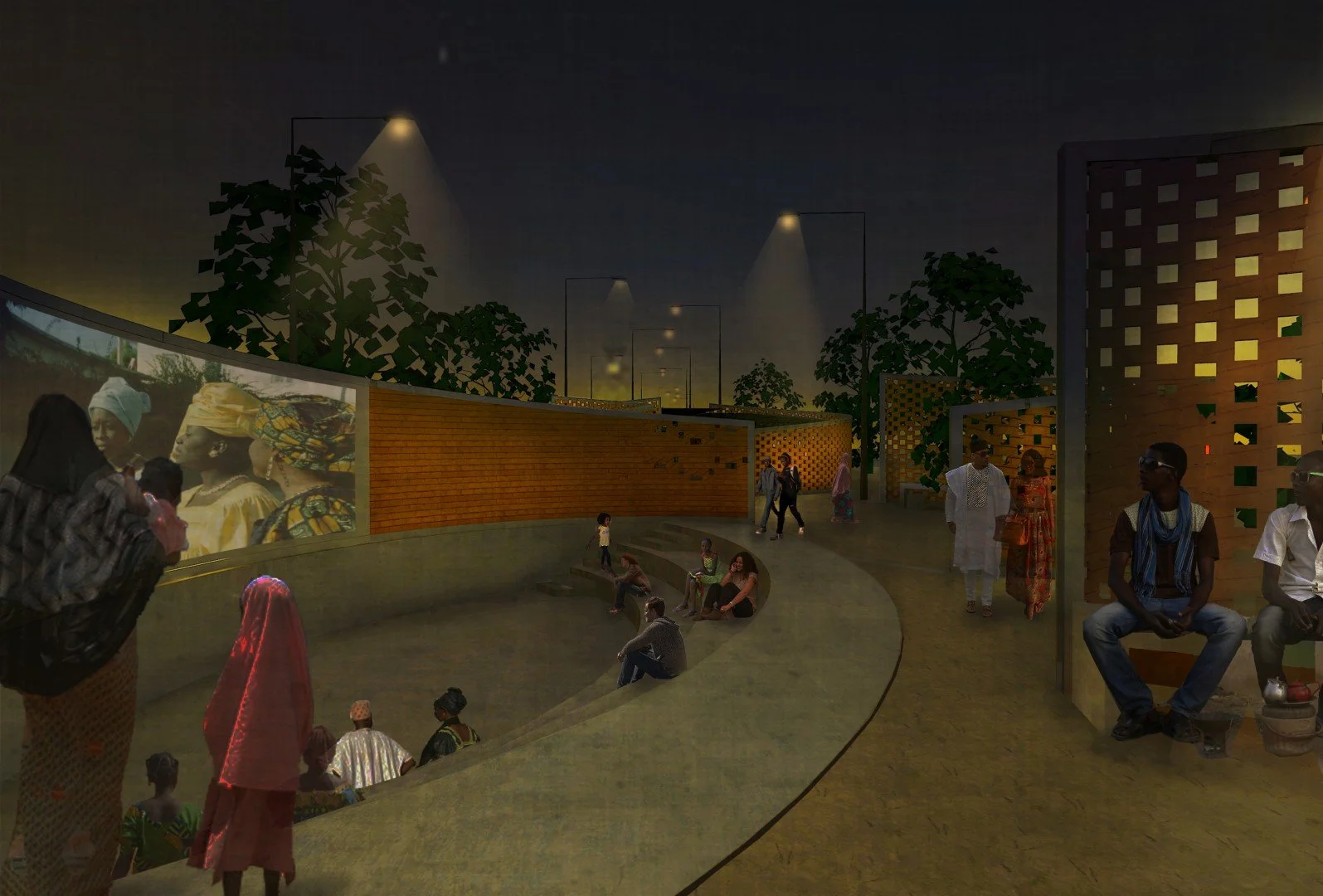
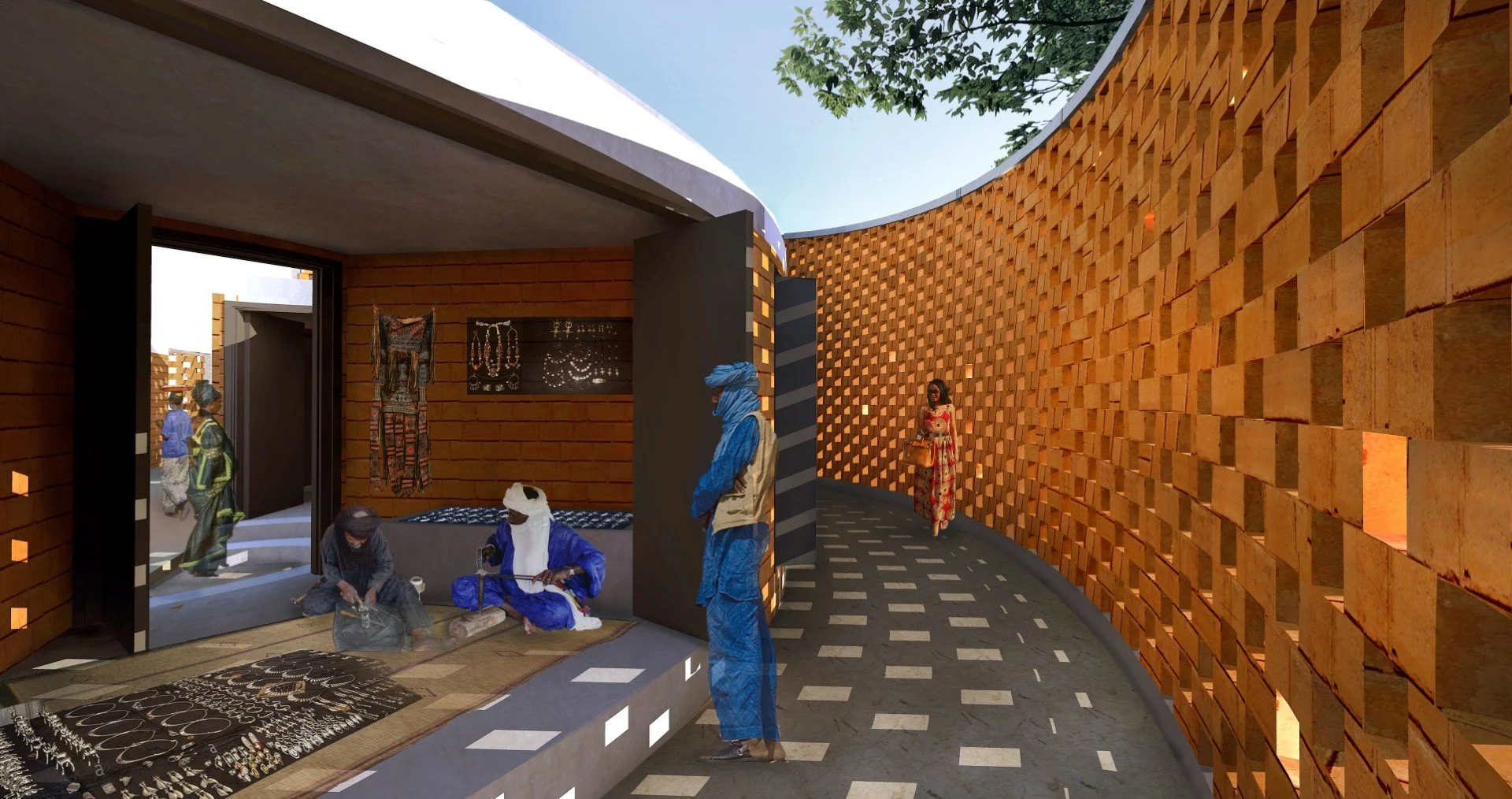
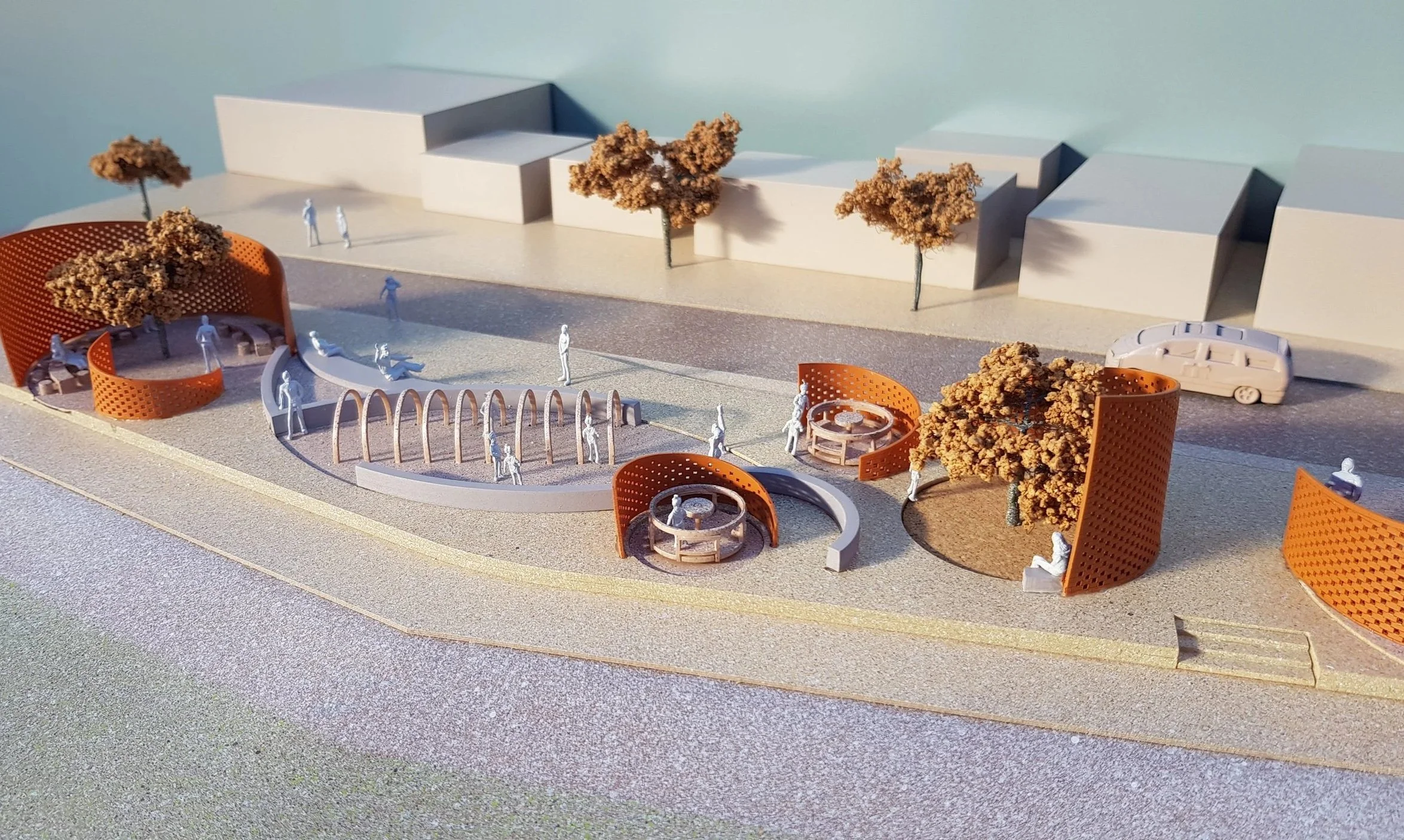
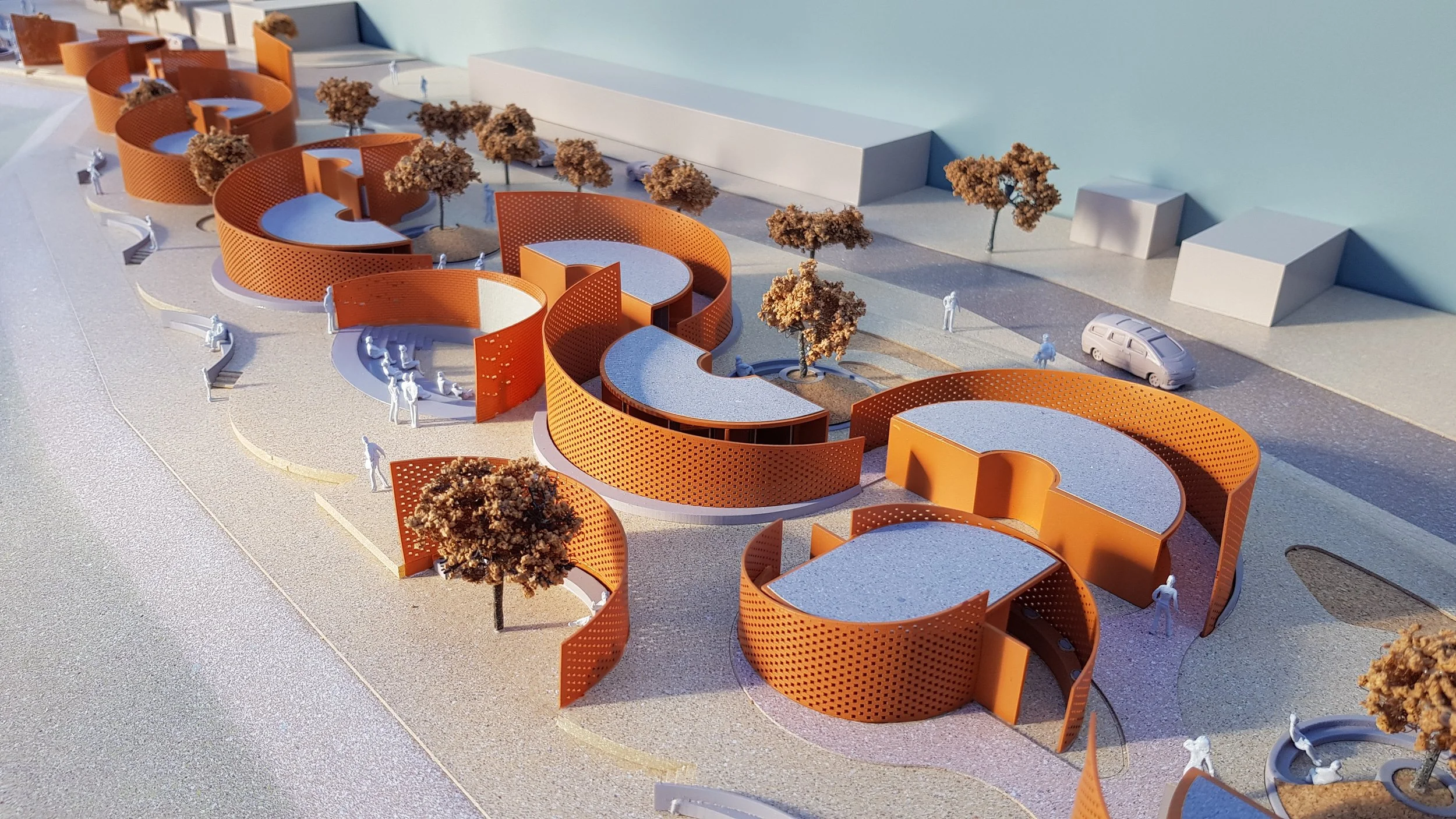
Designed to cater to the city’s culture of nighttime picnics and social gatherings, which are preferred to escape the desert heat, the whimsical promenade enriches Niamey’s civic realm. It hosts artisan boutiques and workshops, sheltered play spaces for children, and an outdoor amphitheater, transforming the valley into an inclusive social and cultural corridor.
-
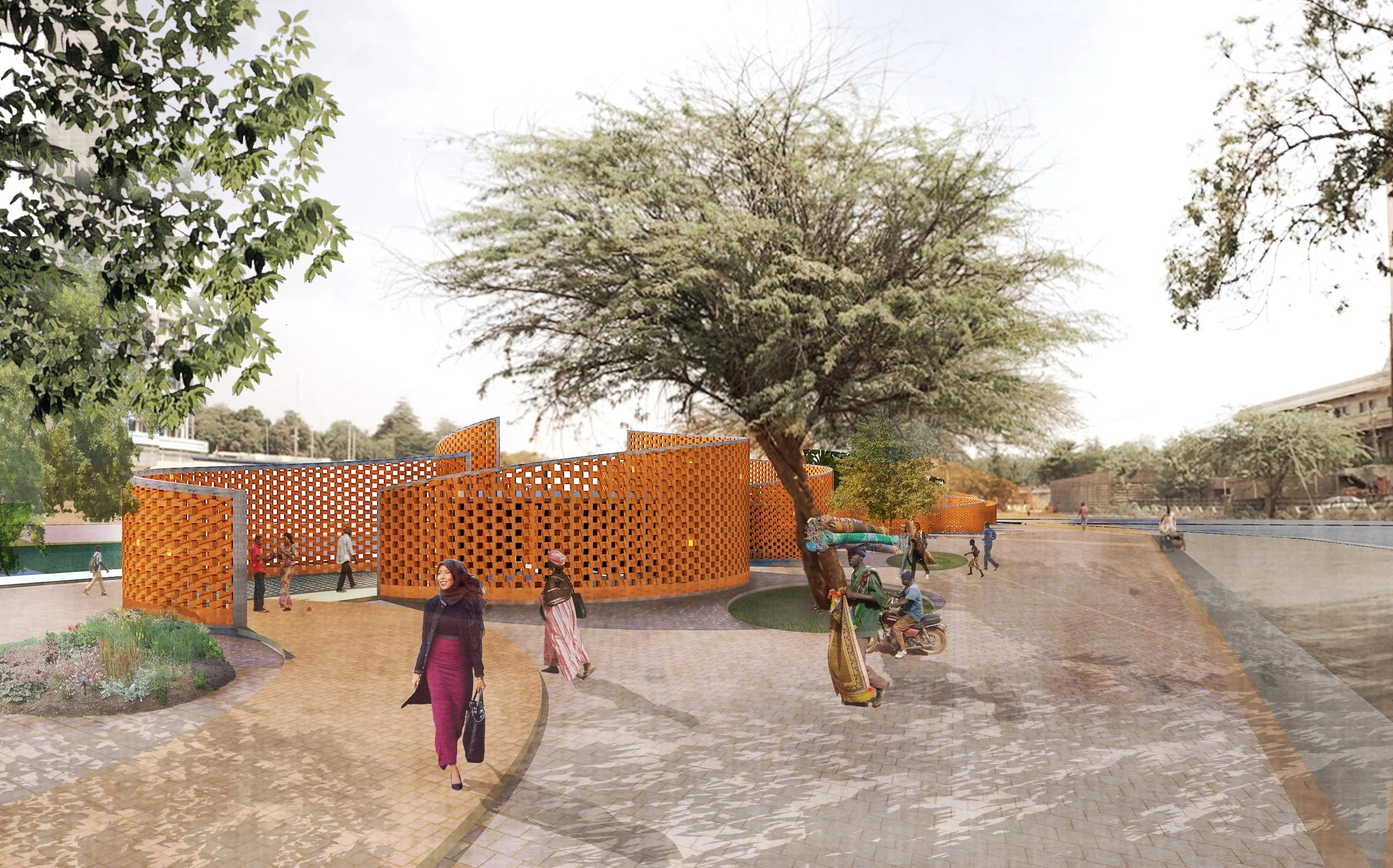
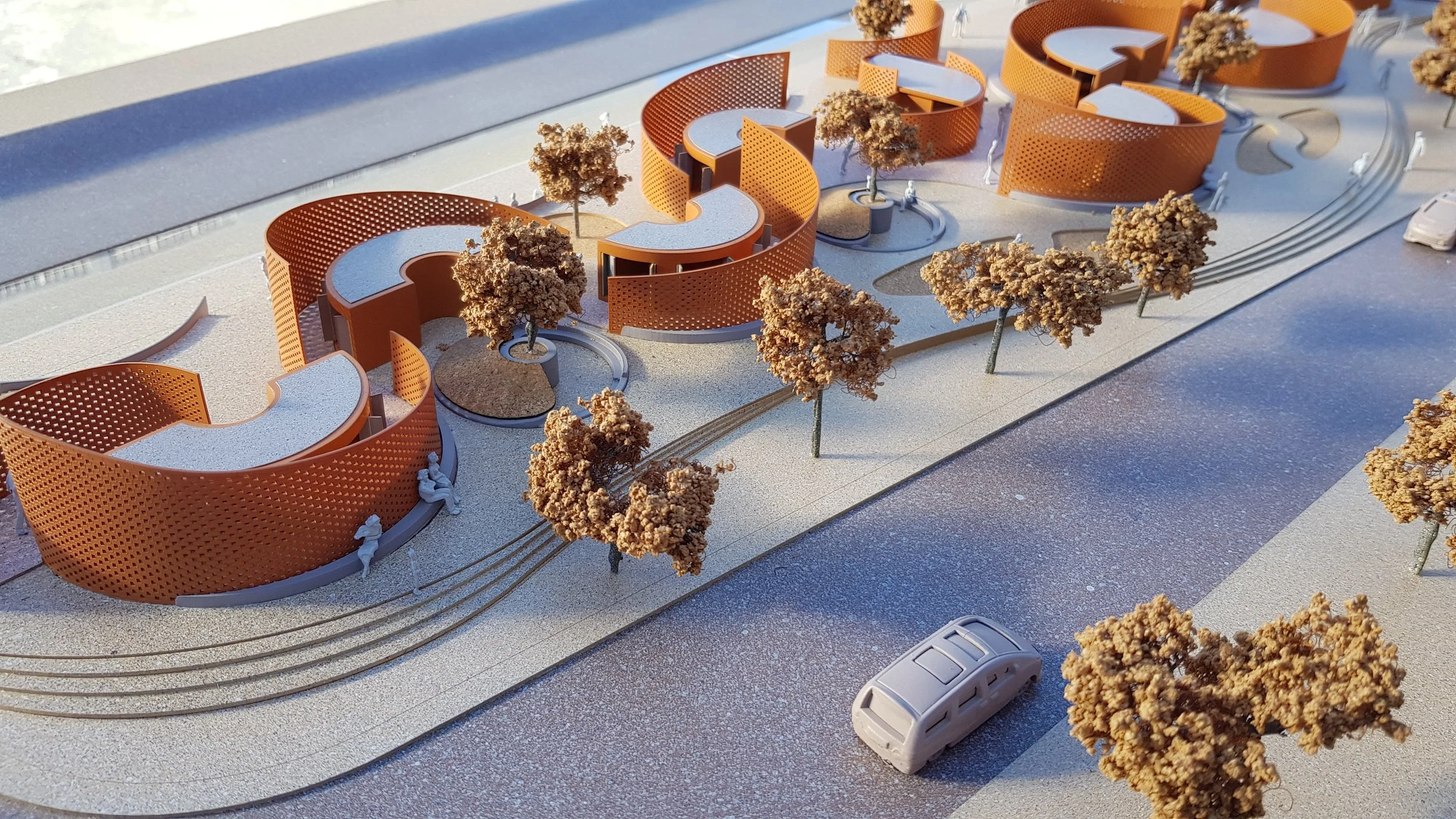
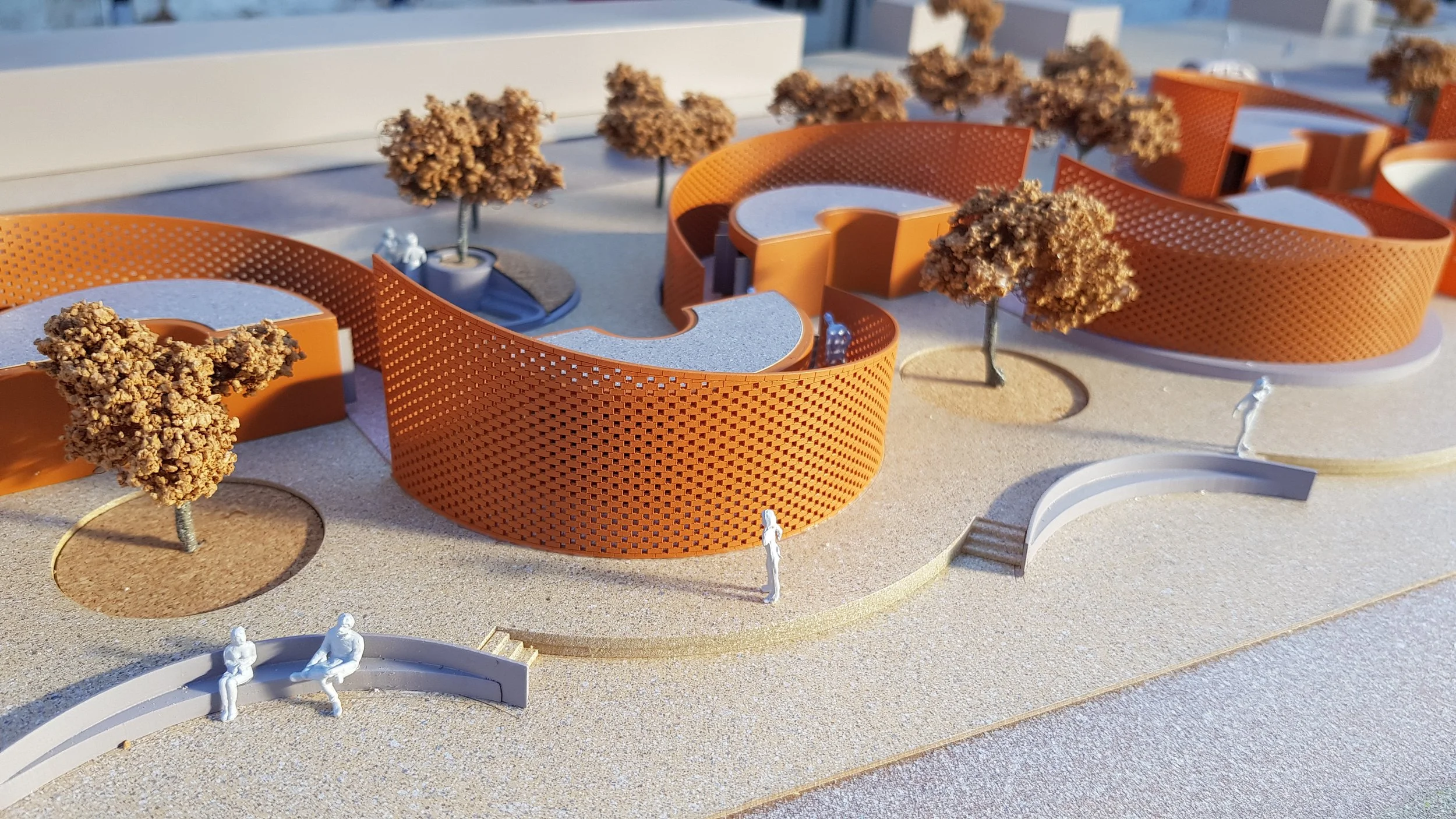
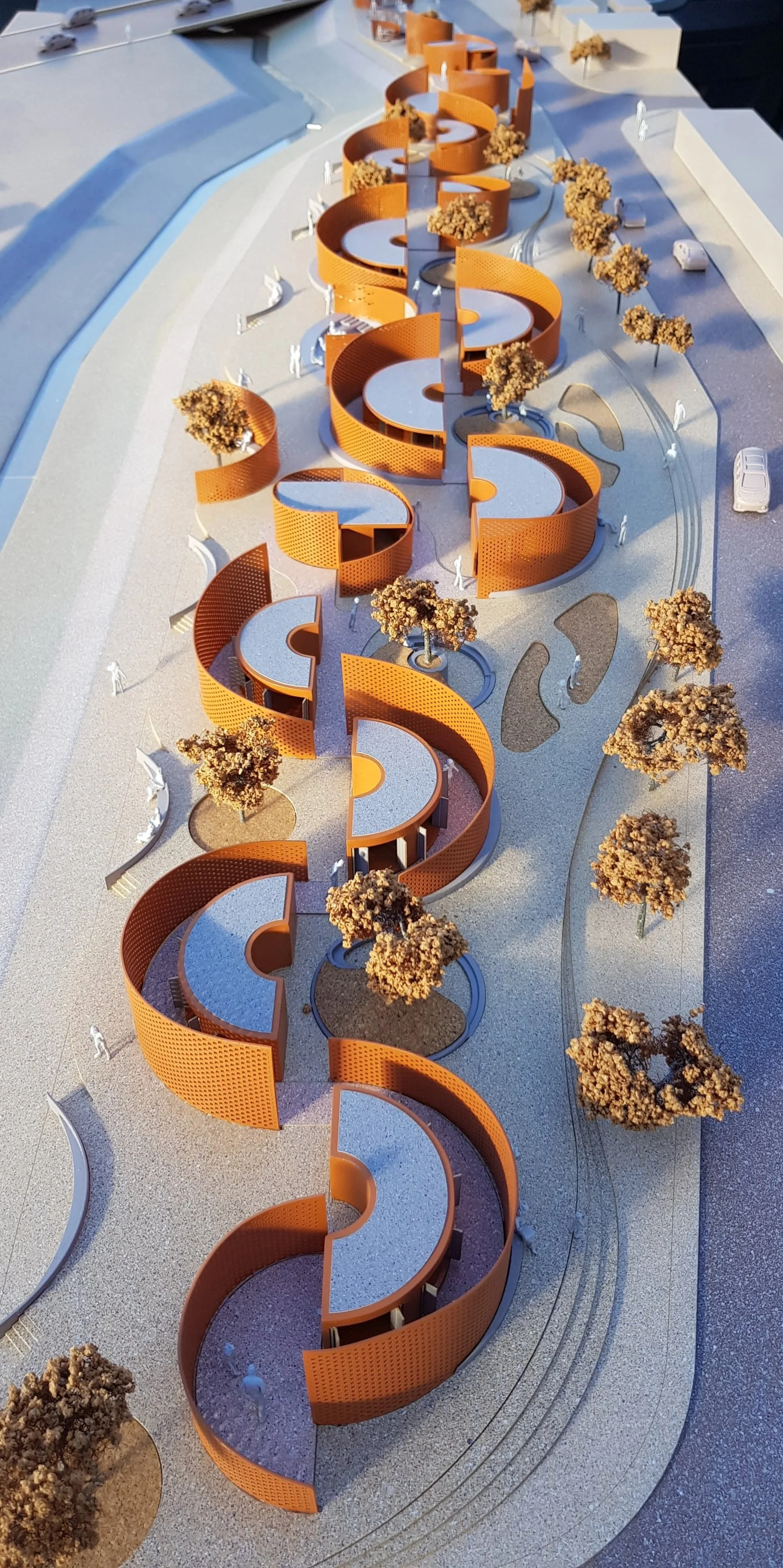
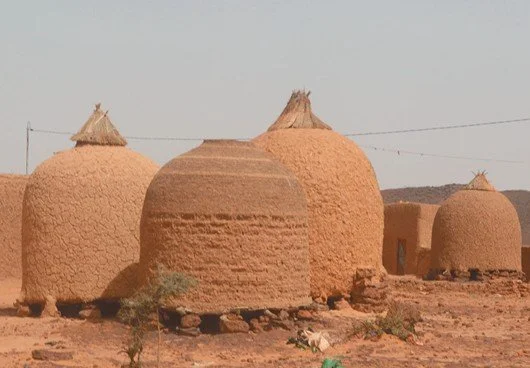
Conceptualized as a large-scale, 200-meter-long permanent installation, the project consists of a series of seemingly fragile shells inspired by Niger’s rural cylindrical clay granary clusters. Set along a valley that meets the river, the semi-circular, perforated structures are constructed from locally sourced Compressed Earth Bricks (CEB) and arranged along the site to form a continuous spatial sequence. More than a commercial spine, the intervention transforms the corridor into a generous public space that encourages gathering and exchange.
Each shell incorporates areas for local artisans to demonstrate their traditional fabrication processes, increasing their visibility and creating opportunities for people across the city to celebrate and engage with their work. Through a simple architectural language, the project foregrounds local craftsmanship while reconfiguring a site long marked by neglect and negative associations, both historically and in the present.
Previously abandoned, unlit, and perceived as unsafe—particularly at night, when crime was a concern—the area is reactivated through light and occupation. By day, the valley hosts artisanal activity, children’s play areas, and shaded spaces for rest. By night, the illuminated shells welcome food vendors and city dwellers seeking casual entertainment and social interaction. Outdoor film screenings and nocturnal picnics become possible, turning a dark and avoided zone into one of the city’s safest and most desirable public environments.
-
Architecture
Mariam Issoufou ArchitectsModel maker
Boyd and Ogier